

Visual feedback that designers can act on
Mark the right area, write a clear request, and separate suggestions from changes that block approval.

“Make this bigger” sounds quick to the person writing it. The designer still has to work out what “this” means and how much is enough.
Useful visual feedback gives the request an address and a result that can be checked in the next version.
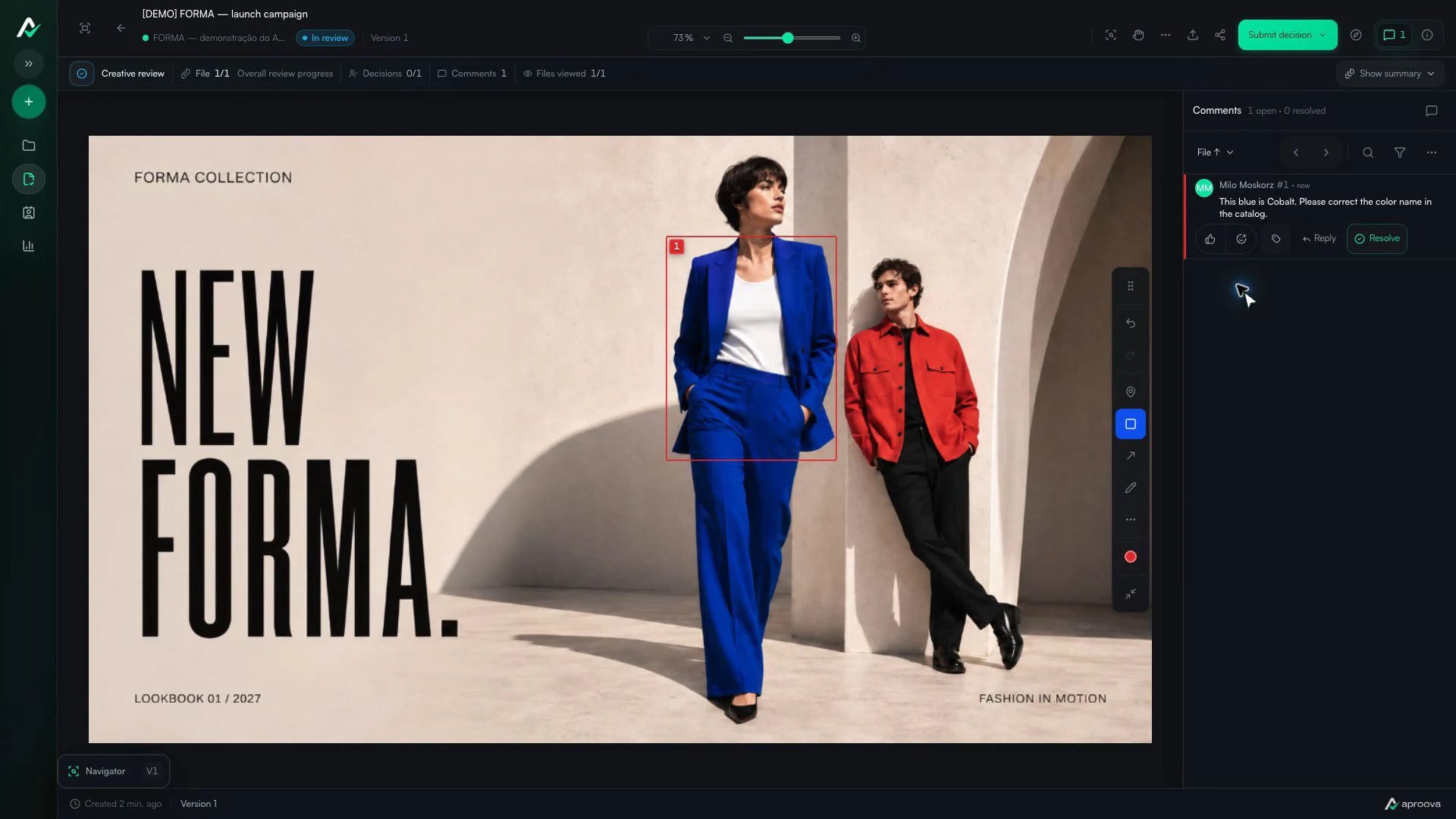
What the video shows
A rectangle marks the blazer. The comment asks for its color name to be corrected to Cobalt. Recorded in Aproova using a fictional fashion collection and test comments.
Mark the area before explaining
Use a point for one element, a rectangle for an area, and an arrow when direction matters. Keep the annotation away from content the designer needs to see.
The marker locates the request. The comment explains the change.
Describe an observable result
Replace “make it more modern” with a change that can be checked, such as reducing the headline weight or adding space above the image.
When the issue is commercial rather than visual, describe the effect: “The price gets lost beside the badge.” The designer can choose the strongest solution.
Separate preference from a blocker
A preferred photo is different from an image that cannot be licensed. Explain the reason when it changes priority.
Mark only changes that prevent approval as required. Keep replies and references in the same comment, then verify the result on the next version.
Use reasons carefully
A reason is useful when it changes priority: a licence expired, a legal sentence is missing, or the price is wrong. It prevents the same issue from returning in the next round.
A personal preference can stay personal. Saying “I prefer option B” is clearer than presenting taste as a rule.
Resolved does not mean approved
Resolving a comment closes one point. The reviewer still needs to inspect the new version and the decision maker must approve the complete artwork.
Questions people ask before setting up the workflow
How long should a visual comment be?
Long enough to identify the issue and expected result. A precise sentence with a marker often works better than a paragraph without location.
Should reviewers prescribe the design solution?
Use a direct instruction for objective rules. For creative problems, describe the effect and let the designer propose the solution.
What makes a change required?
It is required when the artwork cannot be approved without it, such as incorrect information, missing legal text, or invalid brand use.
Continue with these guides

How to compare creative versions without relying on memory
Use side-by-side and overlay comparison to check changes before approving the final artwork.
Read guideHow to review a PDF with clients without scheduling another meeting
Use page-specific comments, clear versions, and one client link to review PDFs asynchronously.
Read guide
How to collect video feedback without chasing timestamps
A straightforward way to review video by frame, keep comments in context, and approve the right cut.
Read guide