

Agency rework: how to calculate the cost of approval failures
Calculate the cost of repeated work, separate scope changes from approval failures and compare your process before and after. Includes a hypothetical example and checklist.
Written by the Aproova product team from the review flows we build and test in the application.
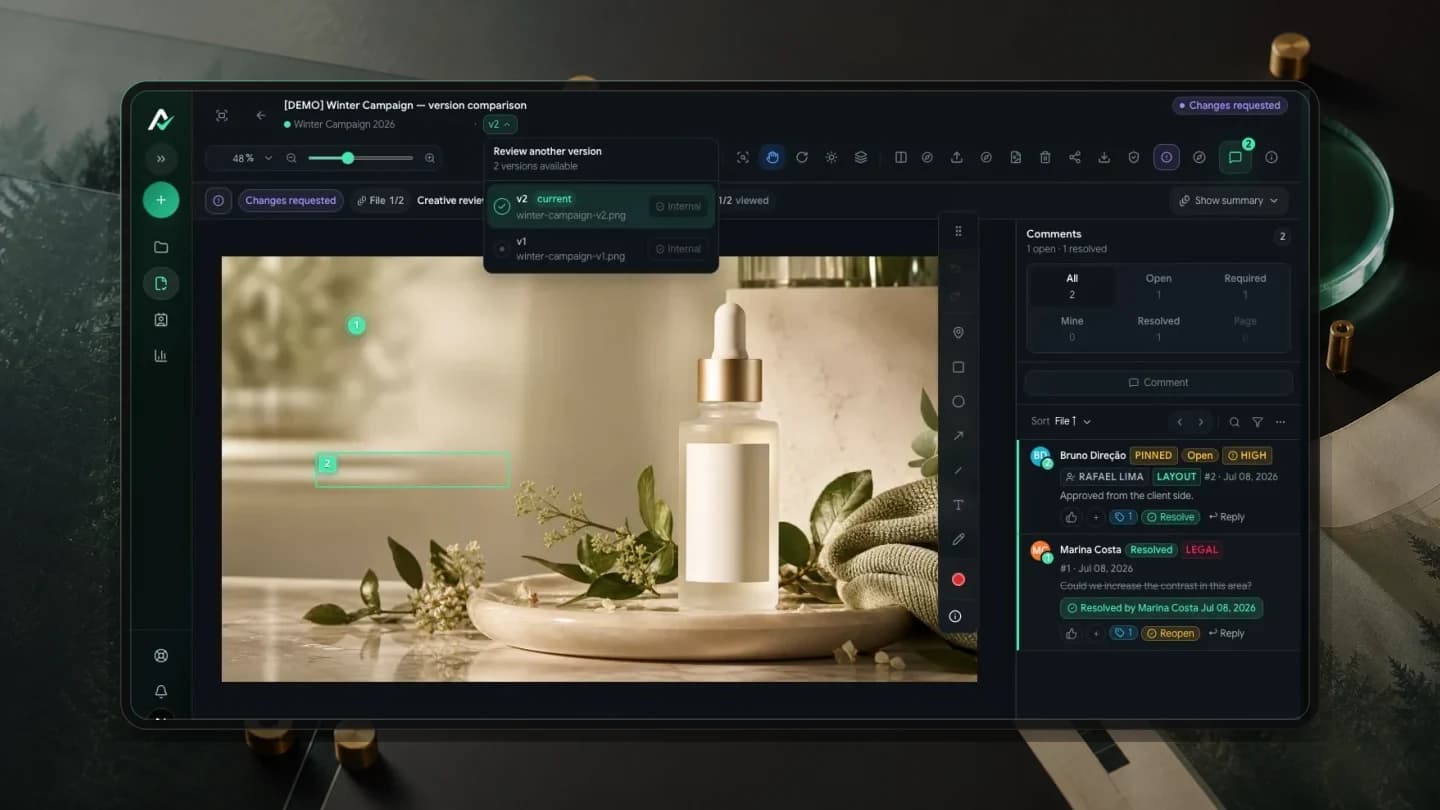
The team corrected the price, but the client approved an old PDF. The file needs another review, someone checks the correction again and delivery is delayed. Those hours are part of the cost of the work, even when they are not billed separately.
To measure rework, separate its causes first. A change of direction agreed with the client is different from repeating a correction that was already recorded. Mixing the two makes it hard to tell whether the problem lies in scope, execution or approval.
The calculation below uses hypothetical figures. Replace them with your agency's records before assessing any process change.
Calculate repeated hours with a hypothetical example
Record the asset, the reason for rework, the people involved and the hours spent. Use an hourly cost that includes your agency's allocation of pay, employment costs and overhead. This cost differs from the rate charged to the client.
Hypothetical example in Brazilian reais: 20 assets reworked in a month, 2 hours per asset and an hourly cost of R$ 90. The calculation is 20 × 2 × R$ 90 = R$ 3,600. If those figures repeated over all 12 months, the total would be R$ 43,200. These are not observed results from Aproova customers or an estimate for every agency.
The amount is the cost allocated to the hours in this example. Reducing those hours may free up capacity, but does not guarantee lower expenses or higher revenue. To calculate the effect on margin, you also need revenue, costs and a record of how the freed capacity was used.
Identify where context was lost
Classify each incident by its recorded cause: wrong version, a comment that could not be located, an unchecked correction or a decision that did not identify the file. Keep separate categories for scope changes and causes that are still unknown.
If a request arrived in a message, connect it to the asset and version before acting. If opinions conflict, decide who will consolidate the decision. Classification only helps when the team uses the same criteria.
Test four safeguards in your review process
Keep the review at one link known to the participants. Anchor comments to the relevant area, page or time. Check which version is under review. Record the decision with the responsible person, date and version.
Aproova brings files, comments, versions and decisions together in this process. The tool helps keep context available; the team still needs to assign responsibilities, check corrections and agree how to handle scope changes. No percentage reduction in rework is guaranteed.
Compare periods without mistaking volume for improvement
Choose a baseline period, such as 30 days, and record rework hours, delivered assets and causes. Then test the process on a defined set of jobs. Compare hours per asset and the proportion of assets reworked, as well as total hours.
Note changes in volume, deliverable type and the people responsible. A simple campaign and a long catalogue do not require the same work. If the sample is small or the scope changes, state that limitation before attributing the result to the new process.
Use the history to discuss what was approved and what changed. Charging for additional work depends on the scope and terms agreed with the client; the review record alone does not settle that negotiation.
Questions people ask before setting up the workflow
What is an acceptable rework rate for an agency?
This guide does not set a universal rate. Separate planned revisions, scope changes and approval failures. Compare jobs of similar type and complexity to build a useful baseline for your team.
How do we assess whether an approval tool is worth the cost?
Compare the full cost of use, including subscription and adoption, with hours and problems measured in your process. The R$ 3,600 example is hypothetical and does not demonstrate return on investment. Test one deliverable before estimating savings.
How can we test the process with the team?
Choose a small set of jobs, agree responsibilities and record rework hours and causes before and during the test. Ask the team and client where they had difficulty. Use the records to decide what to keep or adjust.
Continue with these guides
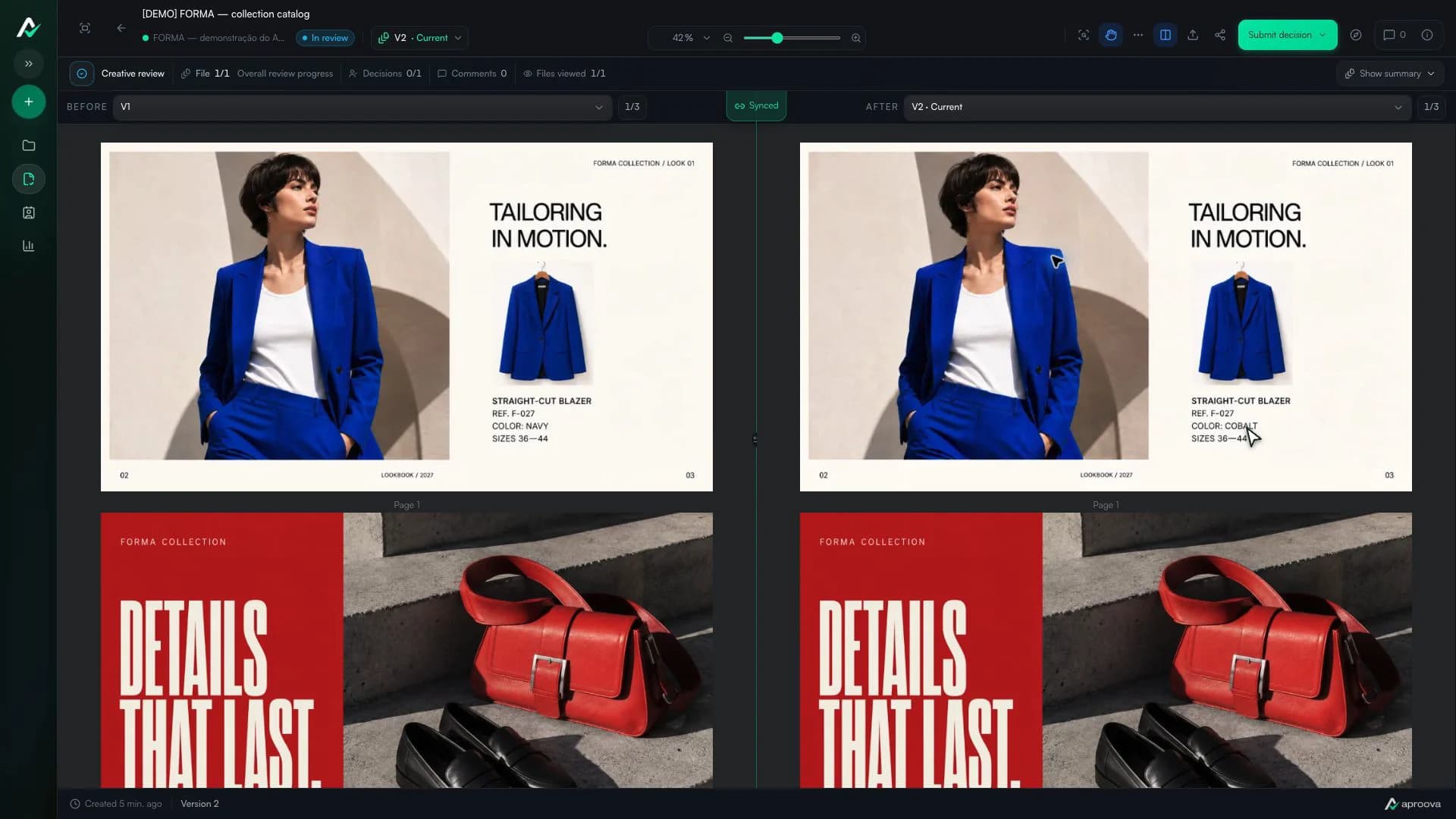
How to compare creative versions without relying on memory
Use side-by-side and overlay comparison to check changes before approving the final artwork.
Read guide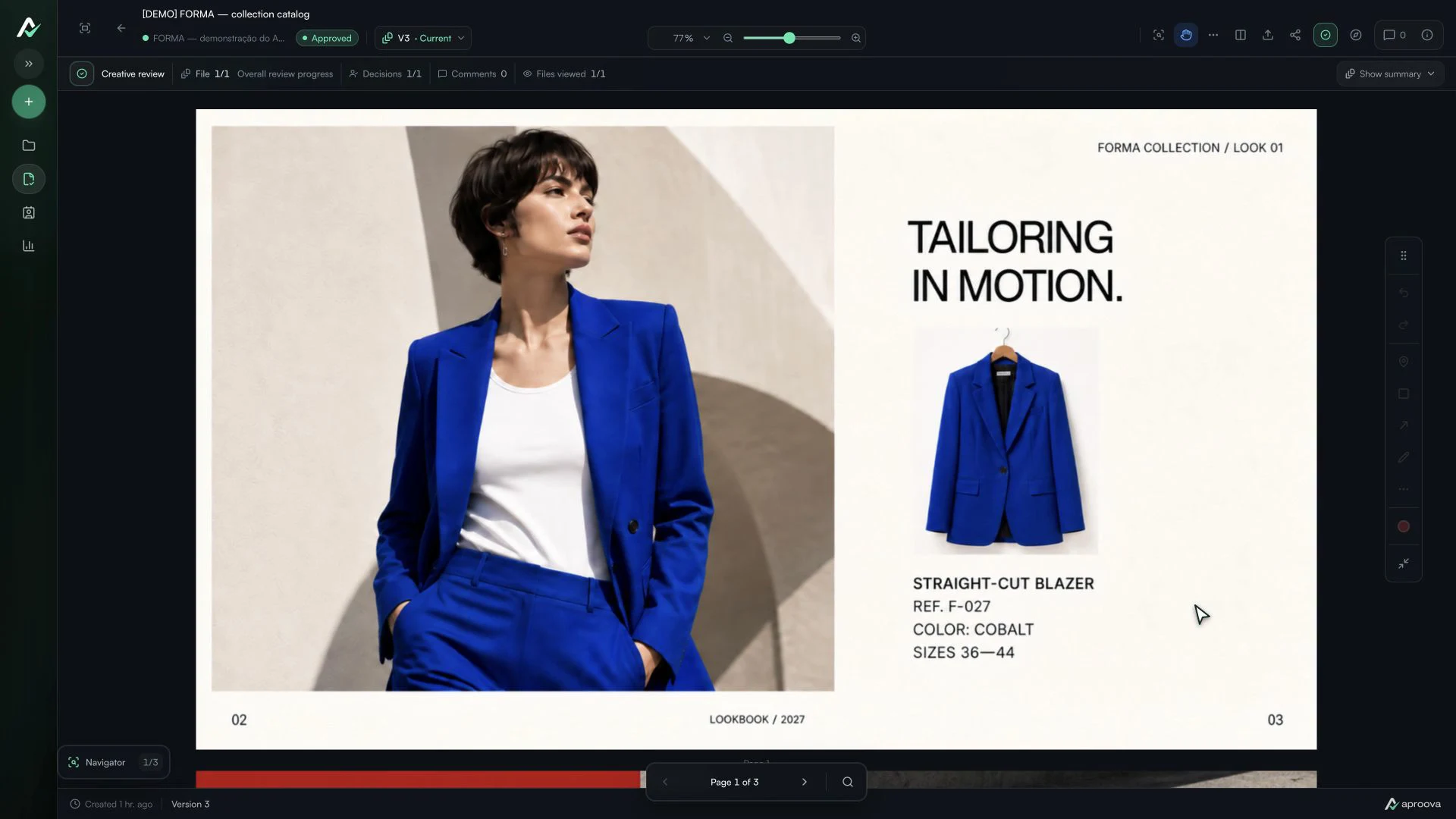
The client approved the artwork, then requested a change. Which decision applies?
Handle a change requested after approval, identify the authorized version and record a new decision without losing the history.
Read guideHow to review a PDF with clients without scheduling another meeting
Use page-specific comments, clear versions, and one client link to review PDFs asynchronously.
Read guide